Author Archives: Comunicaciones Núcleo DISCA
-
-
Seminar: On the Urgency of an Anti-Ability Approach in Inclusive Education
Leave a Comment -
Government presents Technical Table for the Promotion of Inclusion and Participation of People with Disabilities in Higher Education with the participation of our Director, Florencia Herrera
Leave a CommentEn el Salón Montt Varas del Palacio La Moneda se celebró el inicio del trabajo de la Mesa Técnica para la Promoción de la Inclusión y Participación de Personas con Discapacidad en Educación Superior, hito que se enmarca en el convenio de colaboración firmado el año pasado entre el Servicio Nacional de la Discapacidad, SENADIS, y la Subsecretaría de Educación Superior del Ministerio de Educación.
En la instancia participaron autoridades de Gobierno como Javiera Toro, ministra de Desarrollo Social y Familia; el subsecretario de Educación Superior, Víctor Orellana; el director nacional del SENADIS, Daniel Concha; rectoras y rectores de instituciones de educación superior, parlamentarias de la Comisión de Educación de la Cámara de Diputados y Diputadas, e integrantes de comunidades educativas vinculadas a temas de inclusión y discapacidad.
La mesa de trabajo estará compuesta por equipos técnicos de la Subsecretaría de Educación Superior, SENADIS, DEMRE y representantes de instituciones de educación superior, además de organizaciones de estudiantes con discapacidad y de la sociedad civil. El objetivo del espacio será revisar y proponer políticas públicas enfocadas en la promoción de la inclusión y participación de personas con discapacidad en la educación superior, y sesionará mensualmente. En mayo de 2025 la mesa presentará un informe con orientaciones de política pública.
La ministra de Desarrollo Social y Familia, Javiera Toro, manifestó que “como Gobierno nos hemos trazado desafíos exigentes, con la convicción de implementar un sistema de educación pública, gratuita y de calidad. Esta mesa técnica es señal de esto. La educación superior de las personas con discapacidad es un derecho fundamental, cuyas condiciones de ejercicio deben ser garantizadas por el Estado”.
El subsecretario de Educación Superior, Víctor Orellana, señaló que “la inclusión es parte fundamental del derecho a la educación, no sólo para reconocer los talentos de las y los estudiantes, sino también para que el sistema educativo y las demás personas aprendan de quienes antes estaban fuera. Hemos hecho importantes avances en este sentido, pero todavía queda un camino importante por delante para que todas y todos los estudiantes tengan posibilidad de acceder a una educación superior con accesibilidad universal”.
El director nacional del Servicio Nacional de la Discapacidad, Daniel Concha, manifestó que “la educación es un pilar fundamental para las personas con discapacidad, para su desarrollo en cada etapa vital y el ejercicio de su autonomía. Desde SENADIS queremos darle a la educación inclusiva la mirada de curso de vida, que se ocupe del ingreso, la permanencia y el egreso de los estudiantes y las estudiantes, estableciendo un nexo posible y viable con la inclusión laboral. El convenio que hemos suscrito con la Subsecretaría de Educación Superior y el inicio de esta mesa técnica nos sitúa en el camino de este desafío para la educación inclusiva”.
En tanto, María Ignacia Fuentes, estudiante de Psicología y beneficiaria del Programa de Recursos de Apoyos para Estudiantes con discapacidad de Educación Superior del SENADIS, quien es persona sorda y, actualmente, realiza su práctica profesional en el Centro de Apoyo a Personas Sordas, durante la actividad expresó a través de lengua de señas chilena su mensaje: “Hola, hola… Esta es mi seña, mi nombre es María Ignacia, estoy estudiando psicología clínica, ya son siete años en la Universidad Católica, y quiero agradecer a SENADIS y también a mi Universidad Católica por todo el apoyo. Si no hay SENADIS, si no hay intérprete… cómo puedo aprender, cómo puedo entender a los profesores. Por eso quiero agradecer a la universidad los apoyos, los acompañamientos, los apuntes, la lectura fácil para que pueda entender mejor. Por ejemplo, si no hay apuntes, si no hay ayuda, cómo lo puedo hacer. No puedo mirar (a la intérprete) y leer a la vez. Muchas gracias de verdad por el apoyo. Ya me falta poquito para finalizar”, señaló la estudiante de Psicología, quien ha contado con el servicio de intérprete en lengua de señas chilena, permitiéndole el acceso a sus estudios e información durante su carrera.
-
Millennium Nucleus DISCA: “All these spaces are from and with people with disabilities”.
Leave a Comment- With the presence of attendees from different parts of the country, Núcleo DISCA held the Seminar “Towards an equitable health system for people with disabilities”.
- We counted with the presentations of 10 researchers in disability, including the presence of international specialists such as Dikaios Sakellariou, Pia Venturiello, Pamela Molina and Beatriz Miranda.
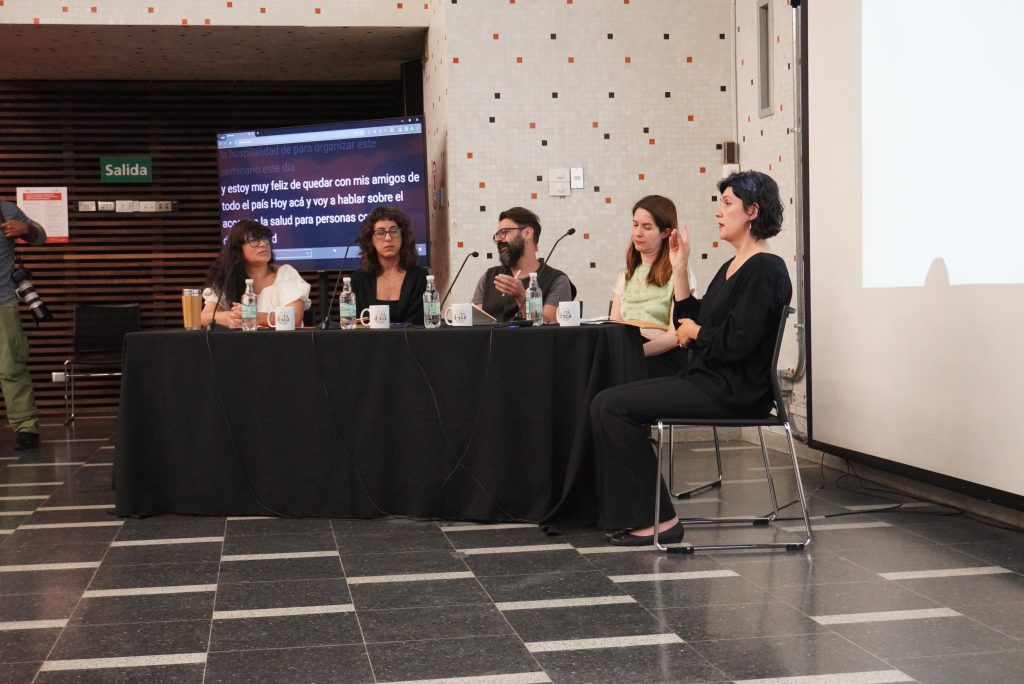
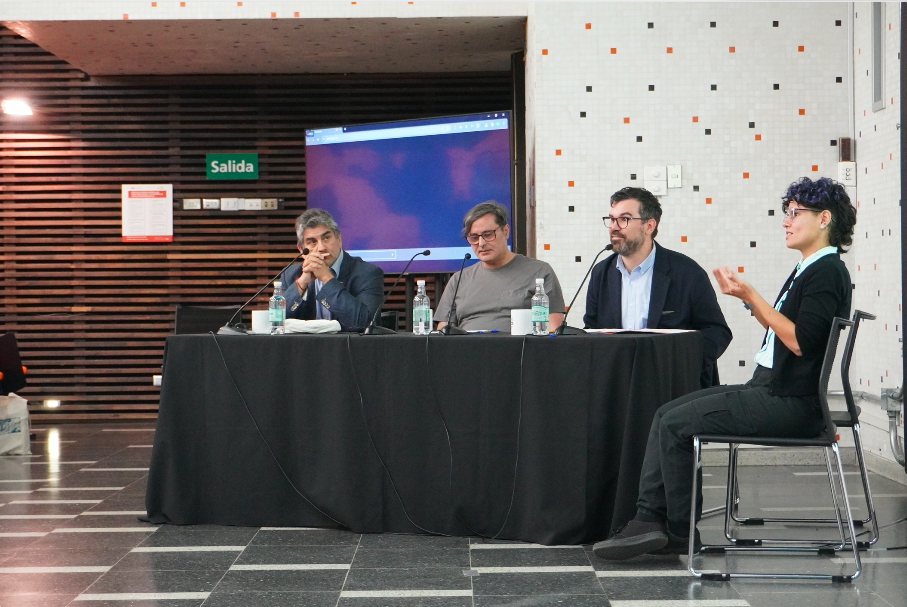
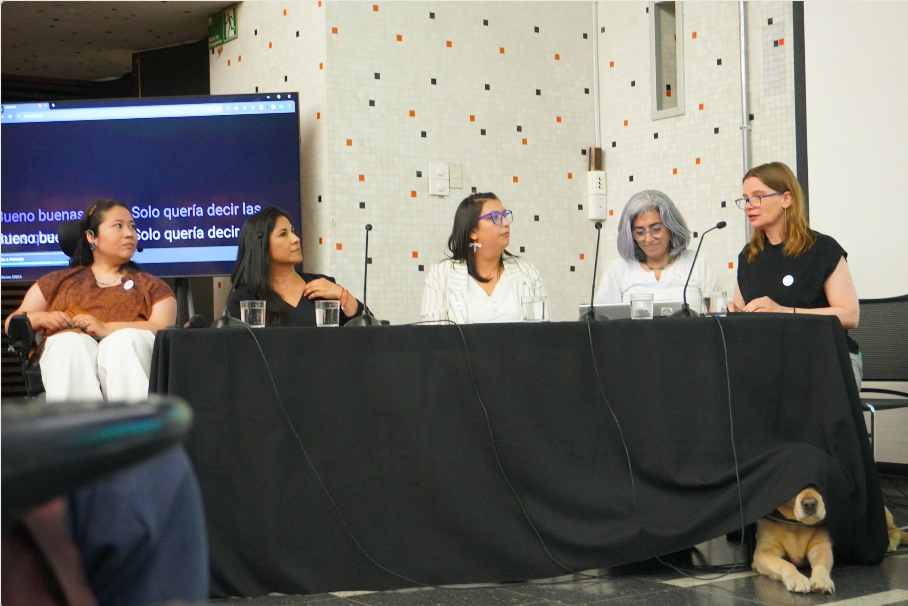
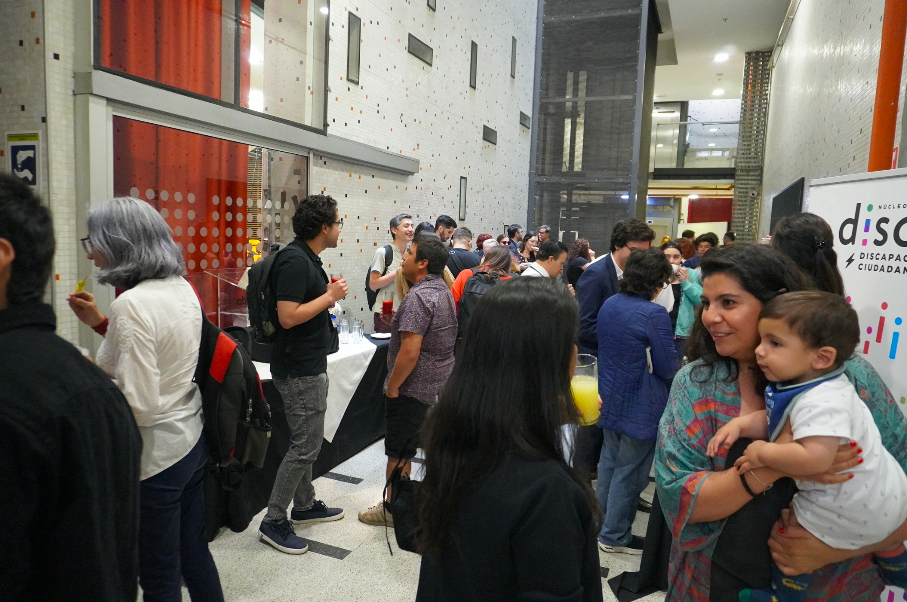
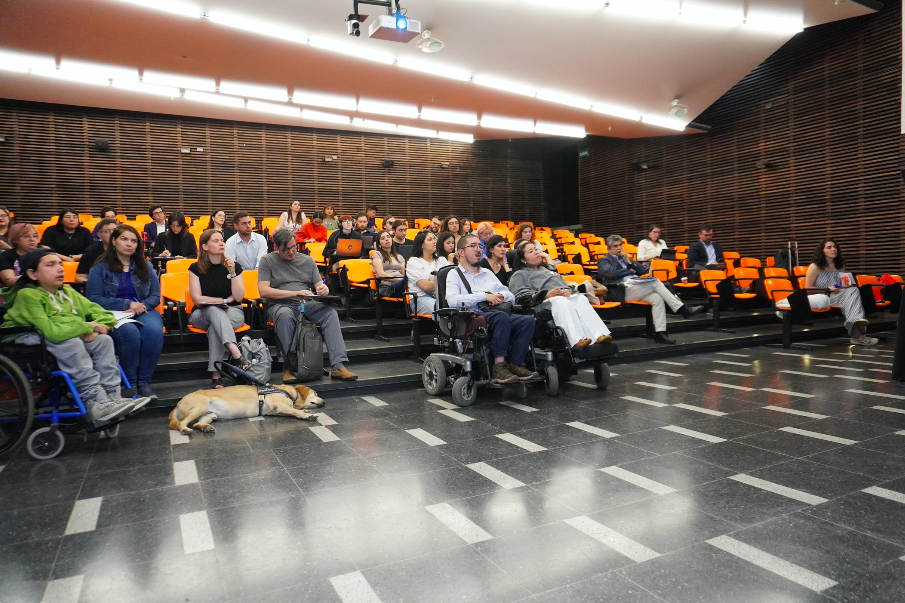
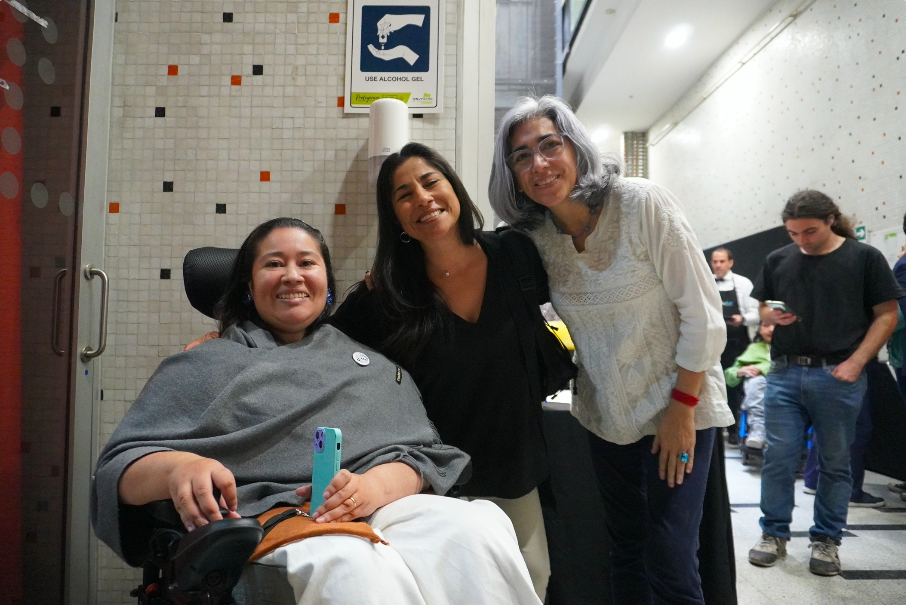
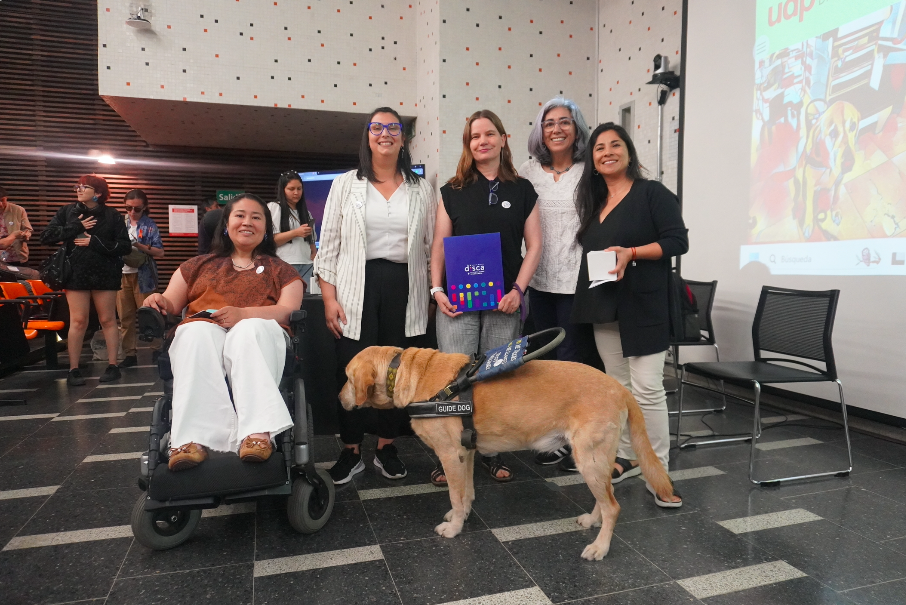
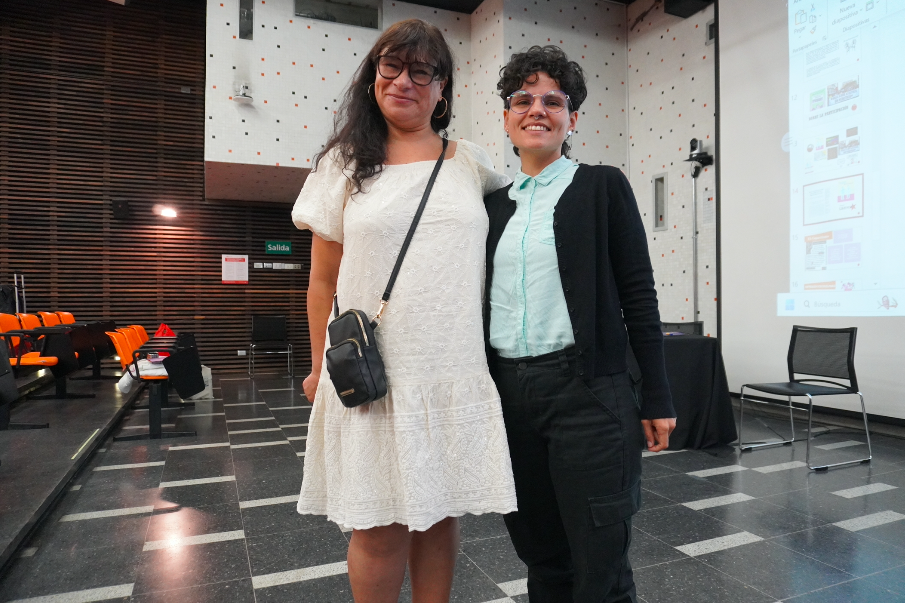
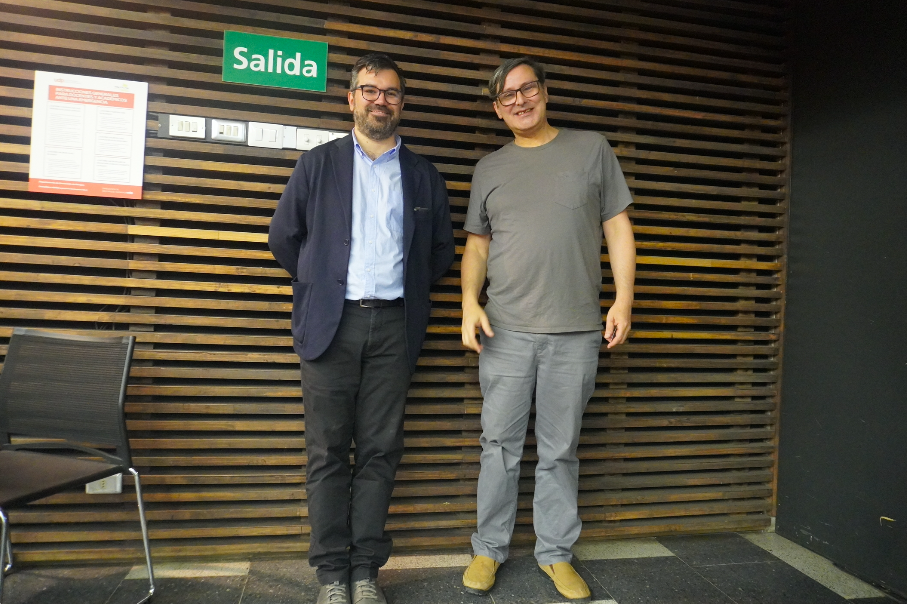
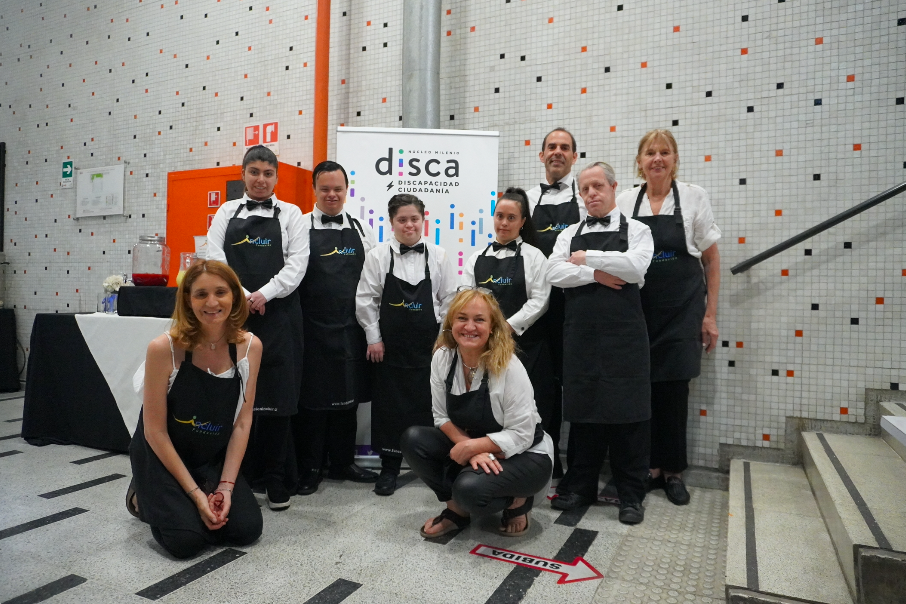
With the collaboration of the Fondecyt DisPar project (Reproductive processes and parental experiences of people with disabilities in Chile: discrimination, adaptation and resistance) and the Universidad Diego Portales, last December 14 – in the Auditorium of the Faculty of Social Sciences and History UDP – was held the seminar “Towards an equitable health system for people with disabilities” coordinated by the DISCA Core Team and with the special support of the Principal Researcher of the organization, Elena Rotarou.
With three panels during the day and the presence of people who had not participated in previous activities, we celebrated diversity and research in different segments. First, we opened with the panel that gave the Seminar its name, with the participation of Dikaios Sakellariou from Cardiff University, United Kingdom; Pía Venturiello, from the University of Buenos Aires and Pamela Molina, Executive Director of the World Federation of the Deaf.
Then, the panel “Reform of mental health legislation in Chile” was held with the participation of the lawyer and alternate director of DISCA, Pablo Marshall, Marcelo Sanhueza from the Ministry of Health and Alejandro Guajardo, Dean of the Faculty of Medical Sciences of the University of Santiago de Chile.
At the end of the activity we celebrated the panel called “Decisions, experiences and support in the reproductive stage of people with disabilities” with the presence of Jimena Luna, Project Coordinator at CEDETi UC and CIAPAT Chile, Andrea Yupanqui from the University of Magallanes, Beatriz Miranda, Coordinator of the Program of critical studies of “disability” and Melissa Hichins from Reprodis.
In this sense, we highlight “the quality of the presentations (which) was of a very high level and we were able to learn about national experiences and from different parts of the world regarding access to health care for people with disabilities (…) which allowed us to learn about other realities, allowing us to ask new questions about the barriers and support that exist in Chile. In addition, we are proud that we were able to have people with disabilities on all the panels. This allows us to continue advancing in our seal: that all these spaces are from people with disabilities and with people with disabilities”, says the team of Núcleo DISCA.
With the realization of this event, we see ourselves closer to the deaf community by having Carmen Figueroa, expert by experience of Núcleo DISCA who officiated as master of ceremonies. In addition, “Pamela Molina, from the World Federation of the Deaf, presented the work they have been doing in different communities; we have interpreters in Chilean sign language and with the attendance of deaf people in the activity. This makes us very happy and challenges us to continue advancing to reach all people with disabilities.
-
Research on parentality by Núcleo DISCA in La Tercera
Leave a CommentOn November 23rd, the newspaper La Tercera published the article: “Unpublished study reveals that half of the people with disabilities in Chile have children”, based on a study prepared by Núcleo Milenio DISCA, from the latest version of the National Survey on Disability and Dependency (ENDIDE). The study revealed that 47.8% of people with disabilities in Chile are mothers or fathers and live with their children. This figure is similar to the non-disabled population with children.
“Until today we did not know how many people with disabilities are mothers and fathers in Chile,” explained the director of DISCA and author of the study, Florencia Herrera, who added that “the official data on parenthood does not ask about disability and the official data on disability does not ask about the presence of children. This is a transcendental data to guide public policies regarding family and childhood”.
To read the full article, you can visit the following link.
-
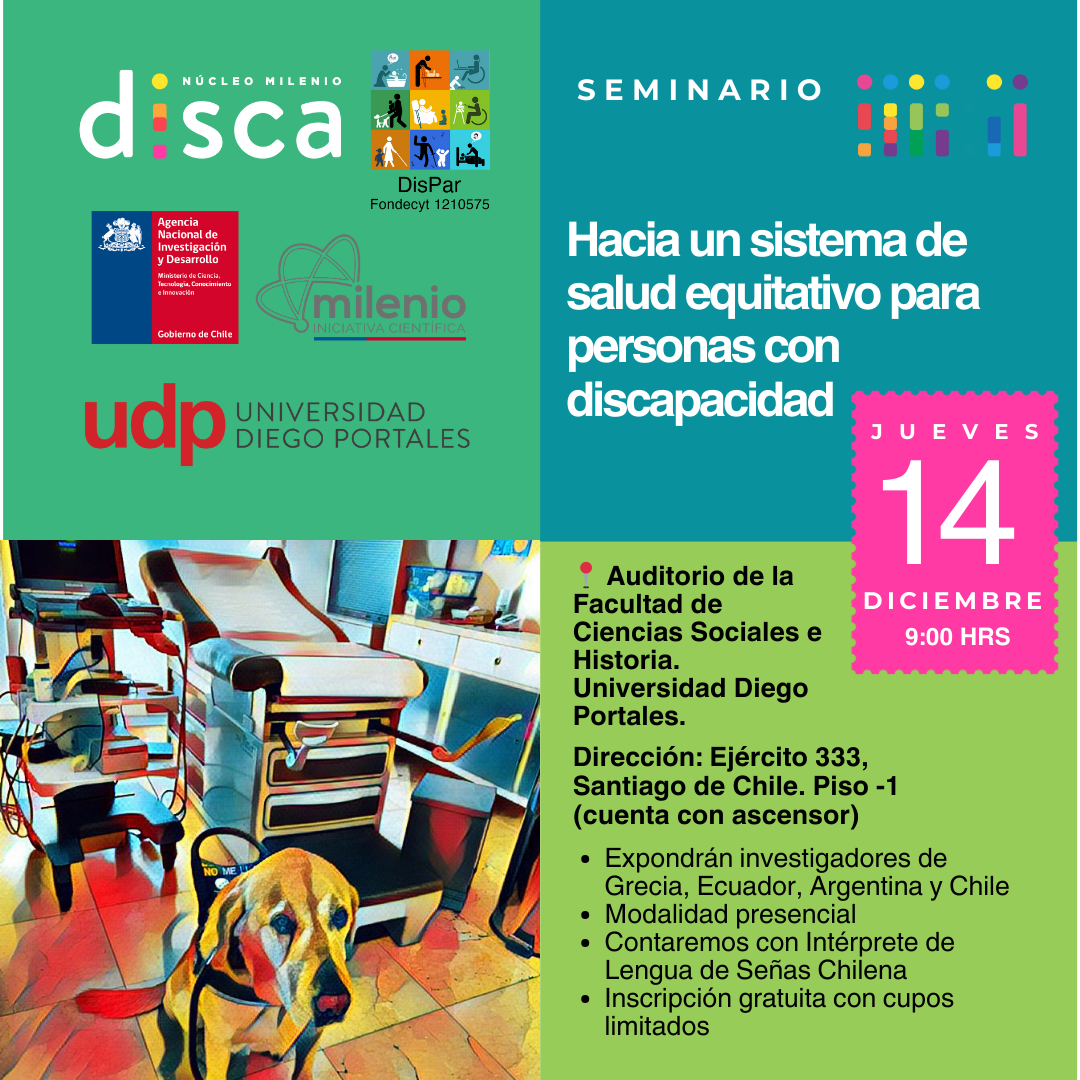
Seminar: “Towards an equitable health system for people with disabilities”.
Leave a CommentAlthough access to health services is a human right, people with disabilities face several barriers in their efforts to access such services, reporting more unmet health needs, worse experience with health care services and personnel, and poorer health outcomes. Timely, accessible, affordable and good quality health services are key to the health and well-being of all people. Aiming to create an equitable health system will not only bring benefits for people with disabilities, but will also have a positive impact on the economy and society.
We need more data and more research on which to base the development of public policies, strategies and programs aimed at transforming the health system. For this reason, it is important to engage in a fruitful dialogue between the academic community, decision makers and people with disabilities and their organizations, in order to identify barriers to access and inequities in health care and move towards an inclusive health system.
For this reason, the Millennium Nucleus DISCA (Disability and Citizenship Studies), together with Fondecyt DisPar (Reproductive processes and parental experiences of people with disabilities in Chile: discrimination, adaptation and resistance), and the Universidad Diego Portales, are organizing the Seminar “Towards an equitable health system”.
Date and time: December 14, 2023 at 09:00 a.m.
Place: Auditorium of the Faculty of Social Sciences and History, Universidad Diego Portales. Ejército 333, Santiago, Chile. Floor -1 (there is an elevator)
Registration: For attendance, prior registration is required at this link.
Program
09:00 to 09:30 Welcome
09:30 to 11:00 Panel 1: Towards an equitable health system for people with disabilities.
- Presenter:
- Dikaios Sakellariou, Cardiff University, UK.
- Pía Venturiello, University of Buenos Aires, Argentina
- Pamela Molina, Executive Director, World Federation of the Deaf, Argentina
11:00 to 11:30 Coffee break
11:30 to 12:30 Panel 2: Reform of mental health legislation in Chile.
Speakers:
- Pablo Marshall, lawyer and alternate director of Núcleo Milenio Disca.
- Marcelo Sanhueza, Mental Health Advisory Council of the Ministry of Health.
- Alejandro Guajardo, Dean of the Faculty of Medicine, USACH
12:30 to 13:30 Panel 3: Decisions, experiences and support in the reproductive stage of people with disabilities.
Speakers:
- Jimena Luna, CEDETi UC, CIAPAT Chile, Fundación Vida Independiente Chile.
- Andrea Yupanqui, UMAG
- Beatriz Miranda, Critical Disability Studies Program.
- Melissa Hichins, UMAG and Reprodis.
-
DISCA Nucleus held seminar on the representation of disability in science and policy
Leave a Comment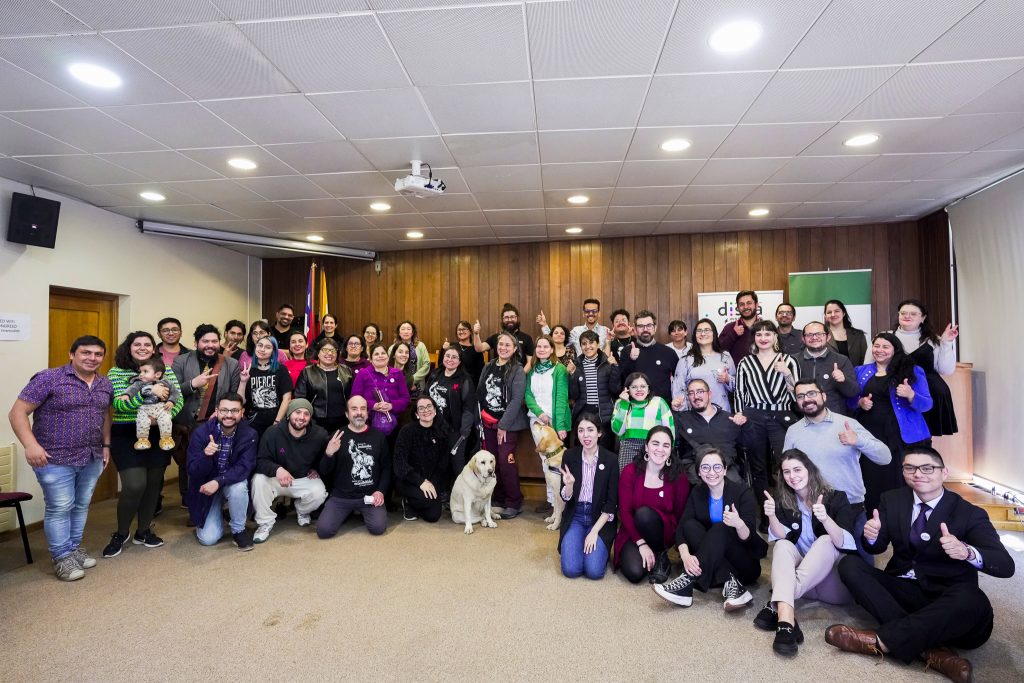
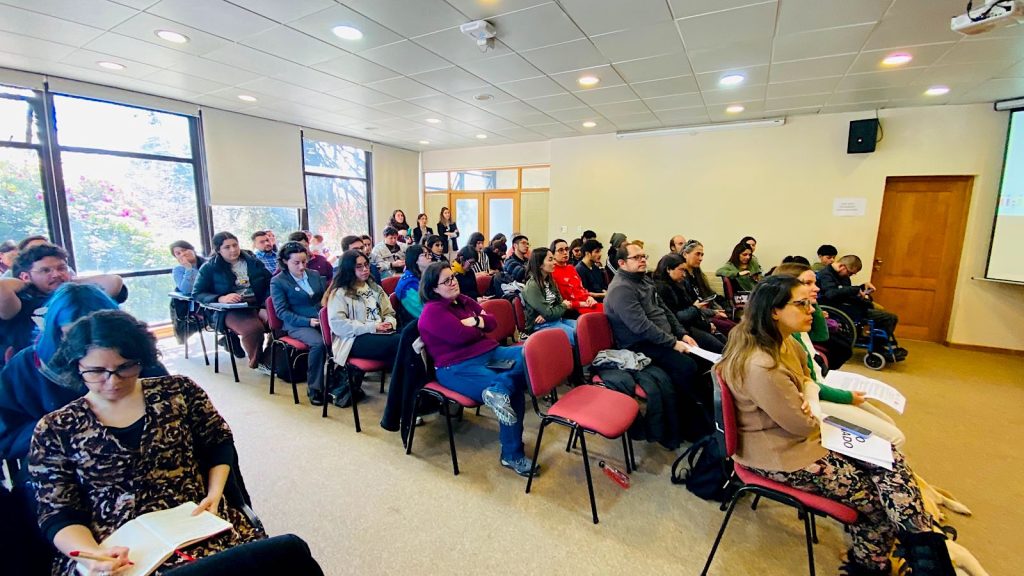
- Con amplia asistencia de público e investigadores con y sin discapacidad, el pasado 12 de octubre, se celebró el Seminario “La Representación de la discapacidad en la política y la investigación” en Valdivia.
- La jornada contó con la exposición de investigaciones individuales y la realización de dos paneles temáticos, uno enfocado en la representación Disca en ciencia y otro en la política.
Con la exposición de 33 investigadores y amplia asistencia de público, Núcleo Milenio DISCA realizó el Seminario “La Representación de la discapacidad en la política y la investigación” en el Campus Isla Teja de la Universidad Austral de Chile, abriendo un espacio para el diálogo, discusión y sensibilización sobre la discapacidad en el país.
Uno de los temas centrales que se abordaron fue la participación de personas con discapacidad en investigaciones científicas, así como su actividad de investigadores. “Fue un espacio de encuentro para muchos investigadores e investigadoras en discapacidad de Chile y Latinoamérica. Fue muy interesante escuchar los avances en estudios que abordan distintos ámbitos de la discapacidad realizados tanto por investigadores con gran trayectoria, como por estudiantes recién comenzando su carrera académica (…) Realizar un seminario accesible es un desafío y creo que hemos estado a la altura”, señala Florencia Herrera, Directora de Núcleo Milenio DISCA.
Relevar la necesidad de cambiar la narrativa en torno a la discapacidad y comenzar a verla como parte de la diversidad que aporta riqueza a nuestra sociedad, han sido de las principales ideas que se mencionaron durante la jornada. Los expositores también se han detenido en los testimonios sobre las barreras y desafíos que viven las personas con discapacidad en varios ámbitos, especialmente en la política y en la ciencia.Entender dónde están y cómo funcionan estas barreras se torna imprescindible para poder desarrollar políticas que ayuden a superarlas y así las personas con discapacidad puedan participar plenamente en la sociedad.
Urgencia de la cual DISCA hace eco, volviéndose una plataforma de investigación, divulgación y sensibilización que permite sentar las bases para la transformación social. Además “(…) estos seminarios sirven como un recordatorio de que la articulación entre academia, las organizaciones y el activismo de las personas con discapacidad tiene un rol que desempeñar en la construcción de un futuro más inclusivo”apunta el Director Alterno de DISCA, Pablo Marshall.
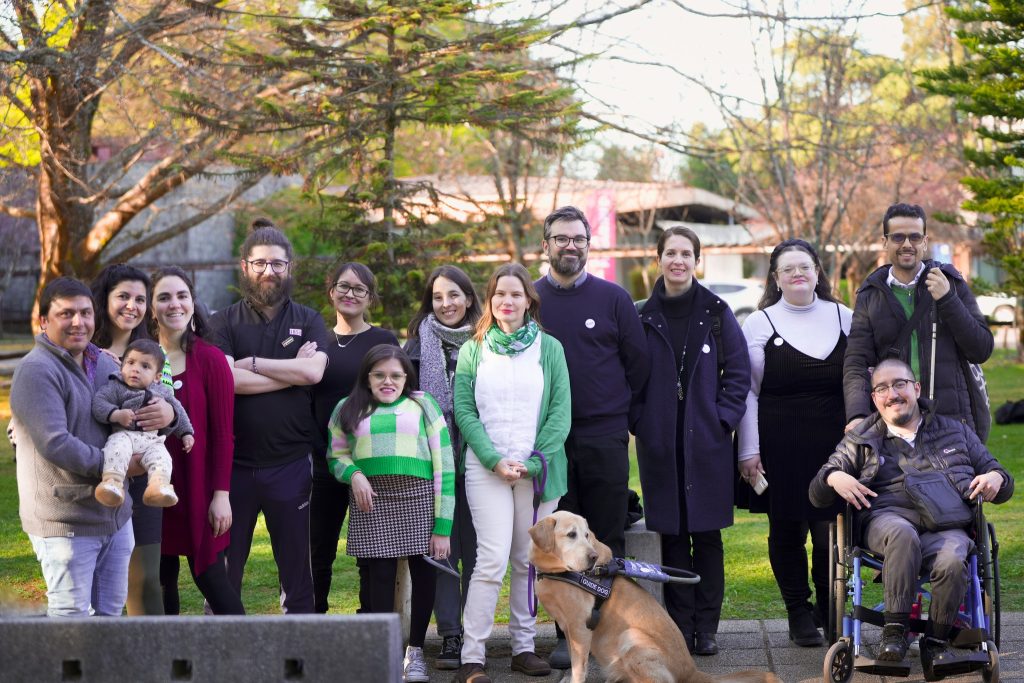
Mira más fotografías del Seminario, aquí.
-
Seminar “The Representation of disability in policy and research”.
Leave a Comment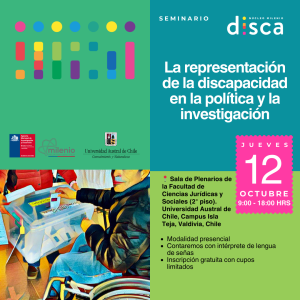
We will address the issue of disability representation in policy and research. There will also be presentations of research on disability in various topics.
The event will take place on October 12, 2023 at the Universidad Austral de Chile, Campus Isla Teja, Valdivia, Chile, in face-to-face mode.
Disability representation is a vital tool for introducing, addressing and challenging ideas about disability. We recognize that, despite its potential to inform and change perceptions, representation can also reinforce inequalities and perpetuate existing stereotypes. For this reason, an in-depth scholarly analysis of how people with disabilities and disability as a phenomenon are and can be represented is crucial.
We will seek to generate a rigorous and diverse academic dialogue about disability in general and the issue of disability representation in policy and academic research. In addition, we seek to generate a meeting space for people who do research on disability.
The seminar will have two parts: during the morning, it will be an open space where research on disability from different disciplines will be presented. During the afternoon, the particular topic of disability representation will be addressed through two discussion tables, one on political representation and the other on representation in research.
The seminar will be held at the Universidad Austral de Chile, Campus Isla Teja, Valdivia, Chile, on October 12, 2023 from 9:00 to 18:00 hrs. The Seminar will be interpreted in Chilean Sign Language (LSCh) and for attendance, prior registration is required at this link.
Program
09:00 to 09:30 Welcome
09:30 to 11:00 Present your research in 10 minutes
Room 1 and 2 simultaneous
09:30 to 11:00 Present your research in 10 minutes (Room 2)
- Nelson Muñoz, University of Chile. Therapeutic itineraries of the rehabilitation process of children with disabilities and their families users of the Western Metropolitan Health Service of Santiago.
- Pamela Gutiérrez, University of Chile. Inclusion of people with disabilities and the concept of human rights in Chilean health policies.
- Pía Rodríguez-Garrido, University of O’Higgins. Obstetric and gynecological violence and its impact on the mental health of Chilean women with disabilities.
- Andrea Tereucán, Universidad de los Lagos. Experiences of health and care in childhood and adolescence of the Autism Spectrum in Osorno, a territorial view (1990-2023).
- Karina Pinto, University of Chile. Political Affections, Illness and Disability: Problematizing the biomedical model of rehabilitation from a feminist anti-empowerment perspective.
- Soledad Toro and Wanda Espejo, Una ruta sin Barreras. The right to recreational sports and tourism: personal assistance as a human right.
Space for questions
09:30 to 11:00 Present your research in 10 minutes (Room 1)
- Esteban Burgos, University of Concepción. The challenge of political inclusion in Chile: Barriers and Facilitators that affect the Electoral Participation of People with Disabilities.
- María Paz Santos Ricartes. Economic growth of people with disabilities.
- Daniella Leal, Pontificia Universidad Católica de Chile. People with Disabilities and their Participation in the Labor Market: Evidence from ENDIDE 2022.
- Andrea Montecinos, Juan González and Constanza Corvalán. Pontificia Universidad Católica de Valparaíso. The new legal status in relation to the entry to school of children with disabilities.
- Bárbara Suazo, University of Chile. The political from the common in organizations of the disability field: The case of Colectivo Autismo Chile between 2011 and 2019.
- Francisca Higuera, Shirlia Jara, Ana Lizama, Daniela Sepúlveda and Ninosca Bravo. Catholic University of Temuco. Dissonances of inclusion with Francisca Our companion and friend.
Space for questions
11:00 to 11:30 Coffee break
11:30 to 13:00 Present your research in 10 minutes
- Daniela Jaure, AVANZA Inclusion. Intellectual disability, social inclusion and quality of life. A look from those who are protagonists.
- Ninosca Bravo, Catholic University of Temuco. Social representations of special education pedagogy students about intellectual disability and developmental disabilities.
- Edison Calahorrano, Central University. The relational approach as a methodology for the representation of people with disabilities in scientific research.
- Mauricio López, DISCA Nucleus. The power of Experts by Experience: Co-creation of knowledge in disability research.
- Constanza López, University of Valparaíso. Care as a possible foundation for the production of knowledge: an approach from feminist disability studies.
- Jame Rebolledo, University of Chile. Research with disability activists from Feminist Epistemologies.
Space for questions
13:00 to 14:00 Lunch (included in the Seminar)
14:00 – 15:30 Panel 1: Political Representation of Disabilities
- Diana Vallejo, U. Iberoamericana Mexico City. The disca as a symbol of the transvaluation of the disabled.
- Diego Solsona, U. de los Lagos. Manufactured by the State, intervened from the biopower: the case of people with disabilities in Chile.
- Jaime Ramírez, U. of Chile. Analyzing the development of social mobilization of people with disabilities in Chile 15 years after the convention.
- Florencia Herrera, U. Diego Portales. ‘Look at me!’: Public and digital political campaigns of people with disabilities in the socio-political crisis in Chile.
15:30 to 15:45 Coffee break
15:45 to 17:15 Panel 2: Representation of Disability in Scientific Research
- Luis Vera, U. of Chile. Paola Arroyo, U. Alberto Hurtado. José Reyes, U. Academia de Humanismo Cristiano: “Disabled” teaching experiences. Reflections situated from the bodies.
- Vanessa Vega and Félix González-Carrasco, Pontificia Universidad Católica de Chile. Izaskun Álvarez, U. de las Américas. Inclusive research as an engine for the transformation of practices in intellectual disability.
- Valquiria Ramos, Pontificia Universidad Católica de Chile. Decision-making processes in academic journals on disability.
- Carlos Araneda-Urrutia, Pontificia Universidad Católica de Chile. Where are and how do academics with disabilities inhabit the university: Contributions for a methodological discussion about the affective infrastructures of academic capacitism.
-
Núcleo DISCA is looking for a Student in Practice
Leave a CommentIn the Millennium Nucleus DISCA we are looking for a student in practice in the area of Communications for the position of Student in Practice of Communications, who must have an interest in disability and inclusion issues and stand out for their creativity and autonomy in the work.
Its main task will be to collaborate with the Communications Coordination to position the Nucleus as a reference in the national discussion related to disability and citizenship, producing and disseminating content on the knowledge generated to other areas of society.
In addition, he/she will have to support in media management, produce activities, keep records of the Nucleus’ actions, among other actions related to his/her work.
Those interested in applying must meet the following requirements:
- University student in the area of Communications.
- Experience in editing, production and creation of audiovisual material.
- Good writing and spelling skills.
- Proactivity, creativity and autonomy at work.
- Ability to work in multidisciplinary and diverse teams.
To apply, the following documents must be submitted:
- Link to portfolio with your audiovisual material (video / photography).
- Letter of presentation and motivation where you express why you are interested.
The deadline for applications is Friday, September 29, 2023 and must be sent via email to comunicaciones@nucleodisca.cl.
Selected individuals will be invited to an online interview at the end of September.